

Caring for a Chinese Seal: Storage, Ink and Cleanup
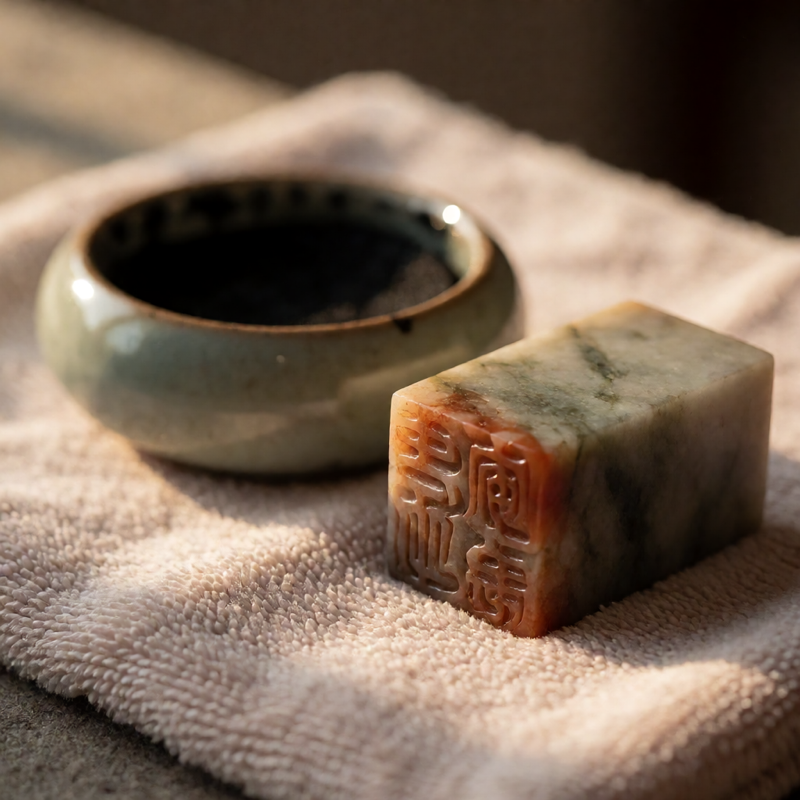
A stone seal is a tool, and like most tools it rewards a small amount of routine. Most damaged seals are not broken by accidents — they are ruined by cleaning, storage and the wrong ink.
After every use
Press the seal onto waste paper once or twice until the impression is faint. That removes most of the ink from the grooves with no risk to the carving. Then wipe the face gently with a soft dry cloth.
Do not wash a stone seal with water and do not scrub it. The carved lines are the part that prints; anything abrasive or repeated will round the edges of the strokes, and once they are rounded the impression loses its crispness permanently.
The ink matters more than the seal
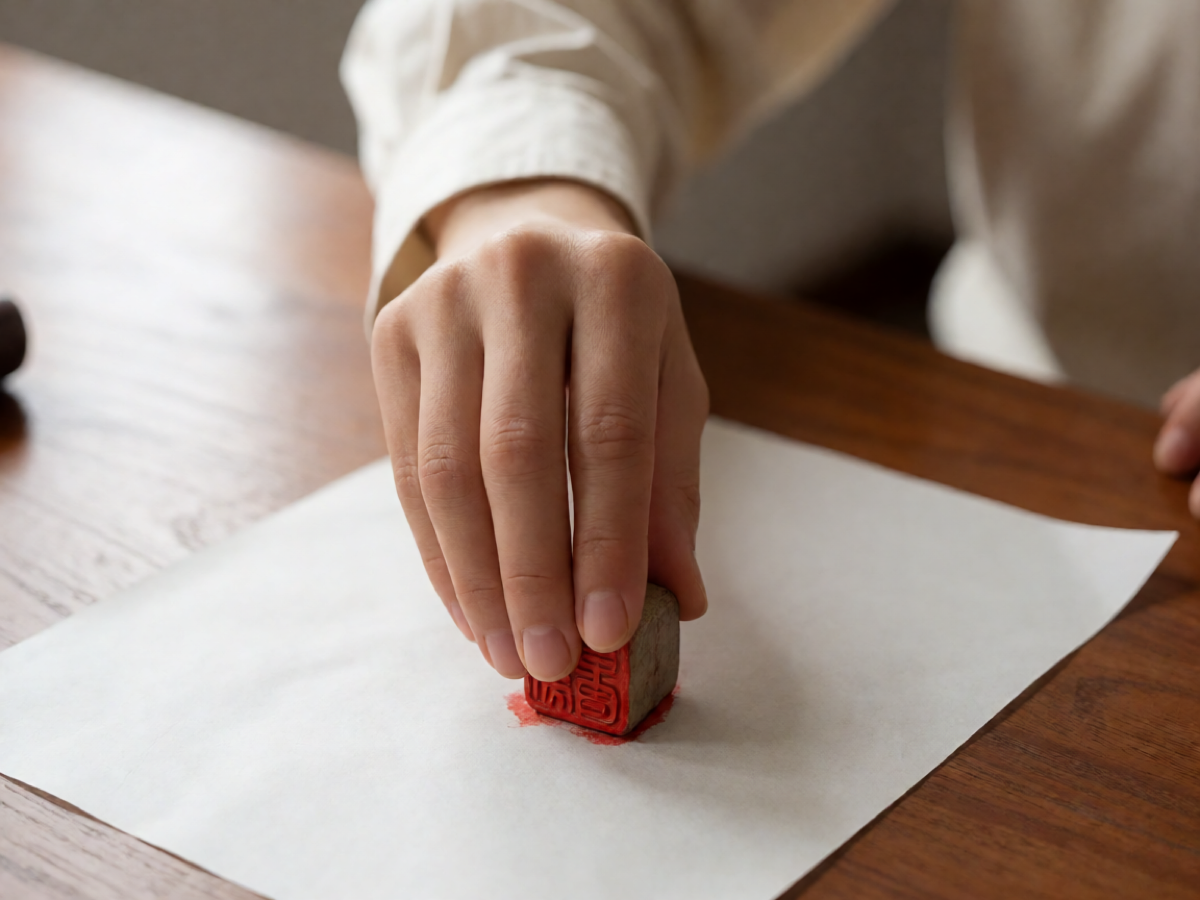
Traditional cinnabar ink paste is oil-based, thick and designed to sit on the raised surface. It gives the dense, matte red that seals are known for. Oil-based paste is also restricted by many air carriers, which is why a water-based ink pad is usually supplied instead — it works well, but it behaves differently.
- Tap the seal into the pad gently and repeatedly. Do not press hard and do not twist.
- An even, light coating prints better than a heavy one. Too much ink fills the grooves and the impression turns into a red blob.
- Keep the pad covered. Ink pads dry out, and a dry pad gives a patchy impression that looks like a damaged seal.
Storing a seal
The carved face is the fragile part. Store the seal face up, or in a box that holds it clear of the surface, so nothing rests against the carving. Keep it out of direct sunlight and away from radiators or windowsills that swing in temperature. Stone that dries out too fast develops hairline cracks, and those cracks do not repair.
If you own more than one, do not let them knock against each other in a drawer. A seal that has chipped a corner of its face is still usable, but the impression will show the chip forever.
If the stone looks dull
A very small amount of clear mineral oil on a cloth, wiped over the body of the stone — never into the carved face — restores the surface. Use it sparingly and rarely. Over-oiling a porous stone can darken it unevenly.
If you put the wrong ink on it
Standard water-based pad ink will come out with repeated test impressions and careful wiping. Oil-based paste is harder: remove what you can by stamping on absorbent paper, then clean the face with a cloth barely dampened with a mild solvent, and let it dry fully before the next use. Never soak the stone.
The long-term view
A seal is meant to be used for decades. The routine is short: stamp out the excess ink, wipe the face, store it face-up, and keep it away from heat. Do that and the impression twenty years from now will look like the test print you took the day it arrived.
If a stone does crack across the face, the seal is usually still usable — a crack running through a stroke will show as a line in the impression, which some owners accept and others have recut. Tell us before you send it anywhere to be re-cut: a carving can sometimes be adjusted rather than replaced.