

Ink, Brush and Paper: The Foundations of Chinese Calligraphy
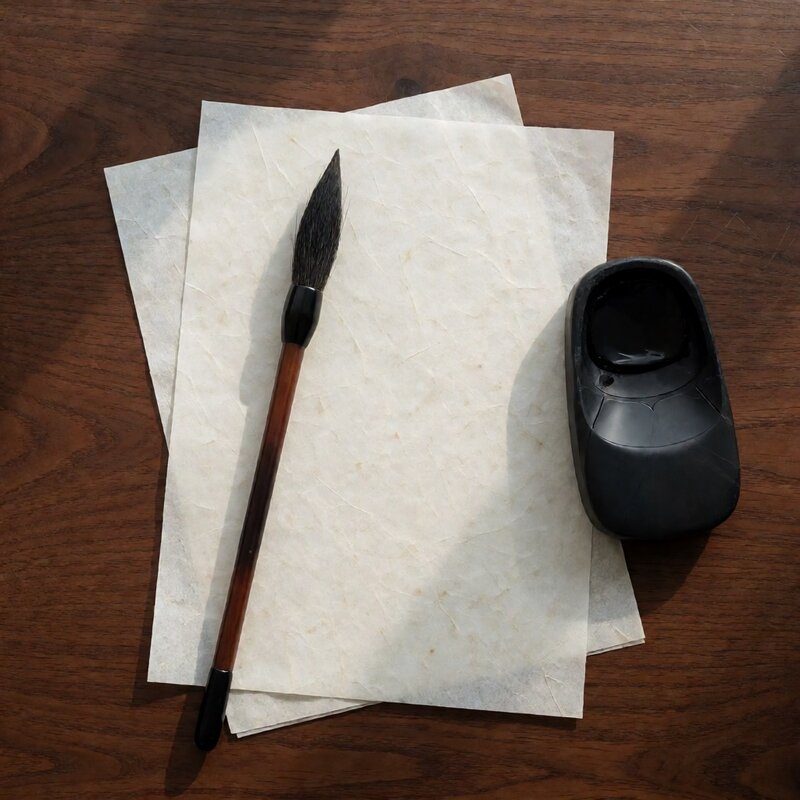
Chinese calligraphy is often described as writing, but it behaves more like a physical craft. The tools decide much of what a line can do: a stiff brush makes sharp corners easy and soft curves hard, while thin ink makes speed visible and hesitation impossible to hide. Before style comes equipment.
Brush: softness and the point
Calligraphy brushes are graded by hair type. Goat hair is soft and holds a lot of ink, which suits large flowing characters. Weasel hair is stiffer and springs back quickly, which suits precise angular strokes. Many everyday brushes blend the two so the tip keeps a fine point but still recovers its shape. What matters most is that the tip comes to a true point when wet, because that one point writes every stroke.
Ink: thick or thin changes everything
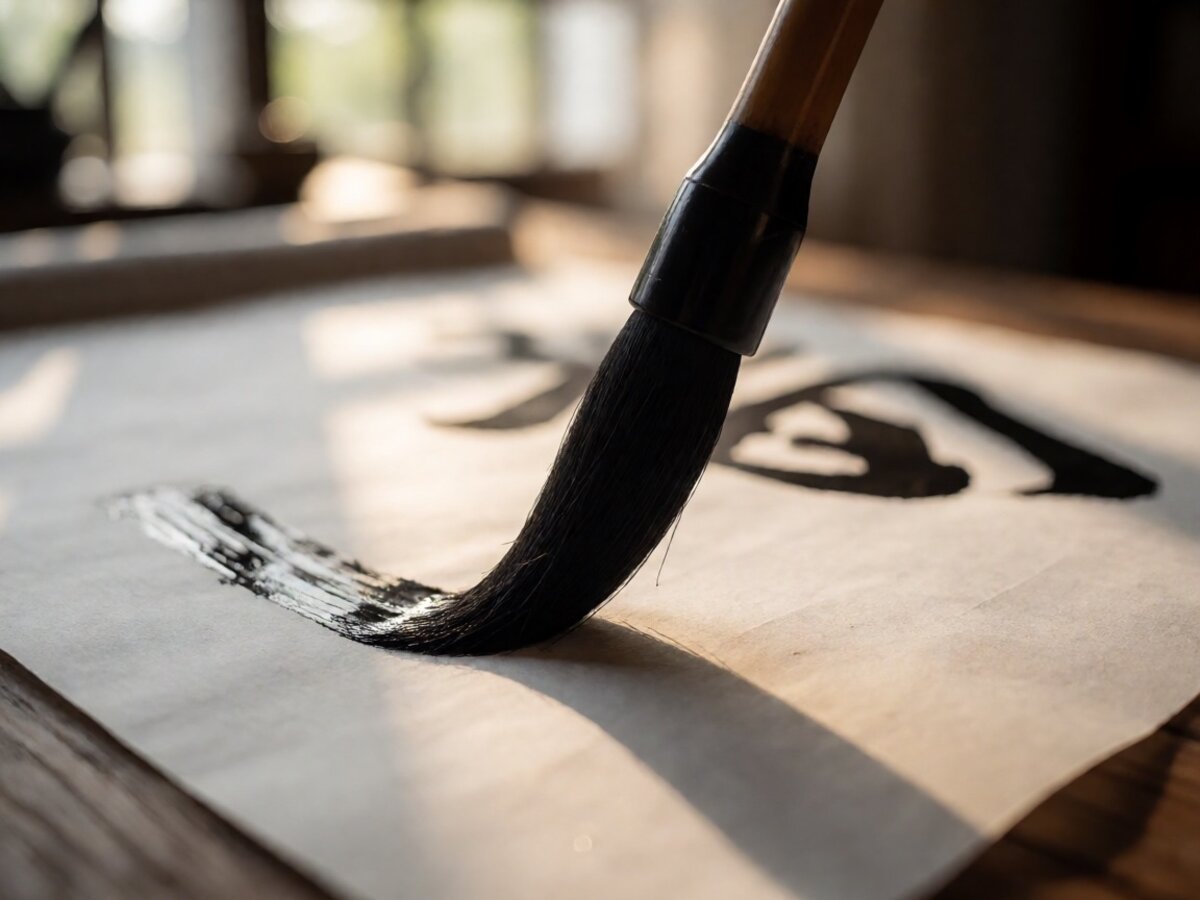
Traditional ink comes as a stick ground on a stone with water. The advantage is control: you decide how thin the ink is, and thin ink reveals the speed of the brush while thick ink sits on the surface and looks almost matte. Bottled ink is perfectly usable for practice and far more convenient. Either way, aim for ink that flows without pooling and dries to a true black rather than a grey.
Ink stone: not just a dish
An ink stone has a grinding surface and a well. The grinding surface is slightly rough, which is what releases pigment from the stick, and the well holds the mixed ink. A surface that is too smooth will not grind efficiently, and one that is too rough wastes ink. If you use bottled ink, the stone is mostly a shallow dish, but its depth still decides how much ink you can load onto the brush at once.
Paper: the material that forgives least
Xuan paper, often called rice paper, is the standard. Raw xuan is absorbent: ink spreads into the fibres, which is beautiful for expressive work and unforgiving for beginners, because a paused brush leaves a blot. Sized xuan has a light coating that limits the spread and gives you a fraction of a second more control. For practice, a stack of inexpensive sized paper is more useful than one sheet of fine raw paper.
Setting up a first workspace
- Brush: one medium goat-hair brush with a good point.
- Ink: bottled ink for practice, a stick and stone if you want to learn grinding.
- Paper: sized xuan or practice paper, cut to a comfortable size.
- Extras: a felt mat under the paper, a small water dish and a paperweight.
None of this is expensive to start with. The point of the tools is not to decorate a desk; it is to make the difference between a confident stroke and a hesitant one visible, so that you can correct it.