

Choosing a Seal Stone: Shoushan, Qingtian and Balin
A name seal is only as good as the stone it is cut into. Two seals carved with identical characters can feel completely different in the hand, wear differently over decades, and take ink in subtly different ways. If you are commissioning a personal chop, the stone is the decision you live with the longest.
The three stones you will see most
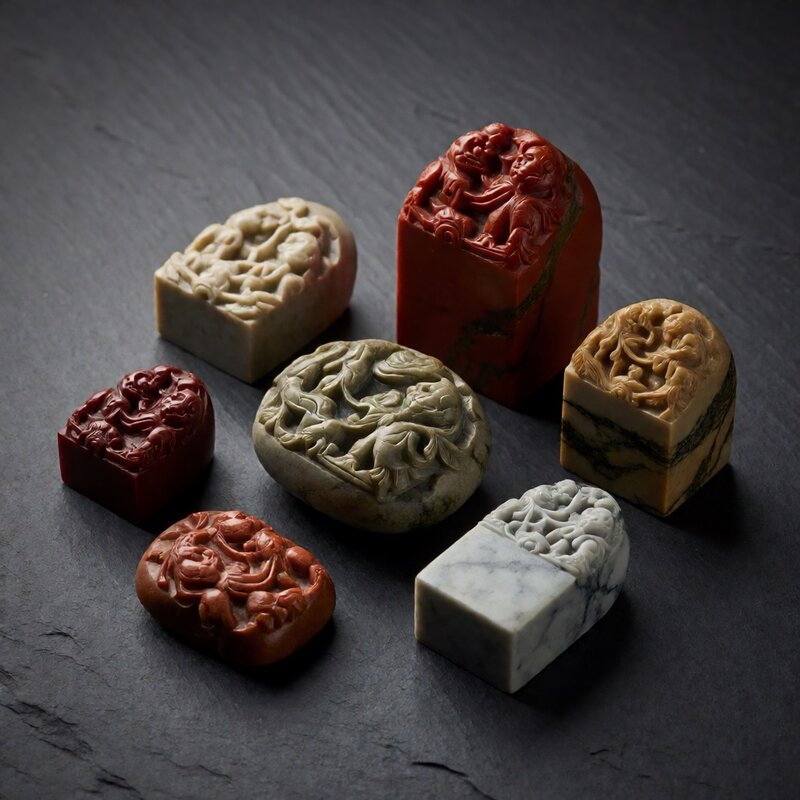
Most Chinese name seals are cut from one of three materials: Shoushan stone from Fujian, Qingtian stone from Zhejiang, and Balin stone from Inner Mongolia. All three are soft enough to carve by hand, which is why they have been used for seals for centuries. They differ in colour range, translucency, and how they behave under the knife.
Shoushan stone
Shoushan is the most treasured of the three. It ranges from creamy white and honey yellow to deep red, and the best pieces carry a faint translucency that catches light. It carves cleanly and holds fine detail, which is why it is the traditional choice for seals with intricate characters. It is also the most expensive, and quality varies enormously from piece to piece.
Qingtian stone
Qingtian is cooler in tone, usually pale green, grey-green or white with fine speckling. It is slightly harder than Shoushan, which makes it more resistant to chipping in daily use. For a seal that will be pressed onto paper hundreds of times, that durability matters. Many artists keep Qingtian for everyday working seals and reserve Shoushan for special pieces.
Balin stone
Balin is the most affordable and the most available of the three. It often shows vivid colour, including strong yellows, reds and blue-grey patterns. It carves crisply but can be slightly more brittle, so it rewards a steady hand. For a first seal, Balin is a sensible place to start.
Hardness, grain and the impression
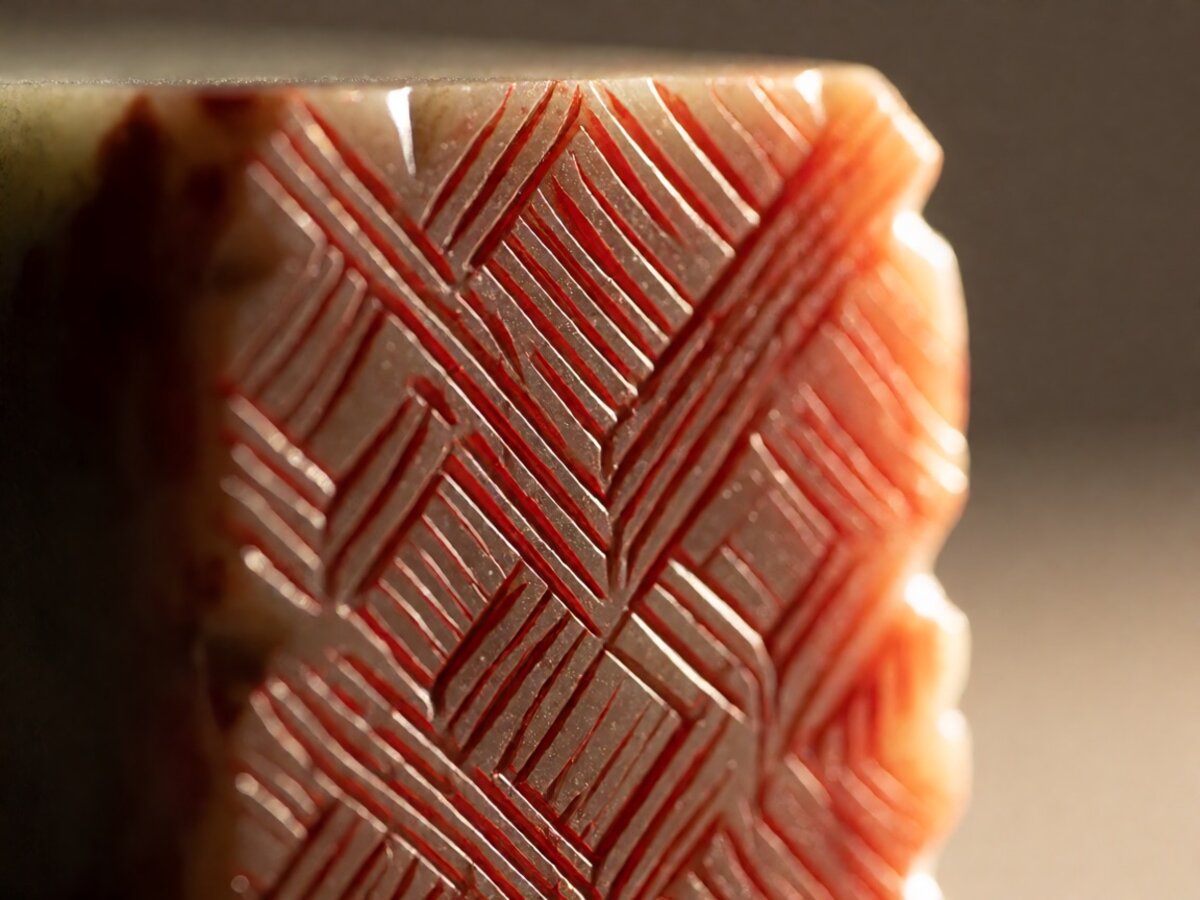
Softness is not the only variable. Grain matters too. A stone with a fine, even grain takes a sharp edge and prints clean lines; a stone with coarse inclusions can crumble at the edge of a stroke and leave a ragged impression. Tilt the stone under a light and look for hairline cracks, hard mineral spots and colour banding. Cracks that cross the face of the seal are the ones to avoid.
How to choose your first seal stone
- Decide the purpose first. A seal used daily should favour durability; a seal kept in a box for letters and certificates can favour beauty.
- Match size to the characters. Two or three characters need a face of roughly 15 to 20 mm. Longer names need more room.
- Check the base. The carving surface should be flat and free of cracks, because a domed base prints unevenly.
- Ask which script the characters will be cut in. Seal script suits almost every stone, but very fine script needs a finer grain.
Caring for a stone seal
Keep the seal out of direct sun and away from radiators, since sudden dryness causes most cracks. Wipe the face with a soft cloth after use so dried ink does not clog the grooves. If the stone looks dull, a very small amount of clear mineral oil on a cloth restores the surface without touching the carving.
Chosen well, a seal stone outlasts the person who commissioned it. That is the standard worth holding yourself to.